
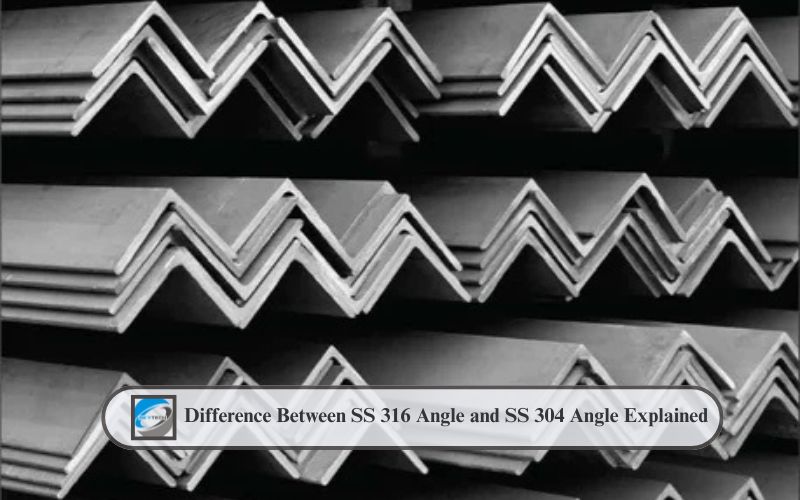
Stainless steel angles are widely used in construction, fabrication, and support structures. Among the different grades available, SS 316 angle and SS 304 angle are two of the most commonly used. While both offer great strength and corrosion resistance, there are some key differences between them. Let’s break them down in simple terms.
What Are Stainless Steel Angles?
Stainless steel angles are L-shaped metal pieces often used for structural support in various applications. They are available in different thicknesses and dimensions, known as stainless steel angle sizes. These sizes help meet specific load and design needs in different industries.
Overview of SS 316 Angle
SS 316 angle is a type of stainless steel angle made with a special element called molybdenum. This makes it highly resistant to corrosion, especially in saltwater and chemical environments. It is strong, durable, and performs well in harsh conditions like marine and industrial areas. Because of its excellent resistance, Stainless Steel 316 angle is used in ships, chemical plants, and other tough environments.
Overview of SS 304 Angle
Stainless steel 304 angle is one of the most commonly used stainless steel angles. It has good strength and corrosion resistance, making it ideal for general-purpose applications. It is suitable for indoor and mild outdoor use, like in building frames, supports, and machinery. SS 304 angle is also more affordable, which makes it a popular choice for many industries.
Composition and Corrosion Resistance
The main difference between SS 304 and SS 316 lies in their chemical composition. 304 stainless steel angles contain chromium and nickel, which offer good resistance to rust and corrosion in most environments. However, stainless steel 316 angle contains an extra element, molybdenum. This makes 316 more resistant to harsh environments like marine or chemical exposure.
So, if you need angles for coastal areas or places with high chemical exposure, 316 stainless steel angle brackets are a better choice due to their improved corrosion resistance.
Strength and Durability
Both 304 and 316 stainless steel are strong and durable, but 316 offers slightly better strength under high temperatures and extreme conditions. 304 ss angles are perfect for general-purpose use like in buildings, frameworks, and furniture, while SS 316 angle is used in more demanding environments.
Availability and Suppliers
When looking for these angles, you will find many stainless steel 304 angle suppliers offering a wide range of sizes and finishes. They are easier to find and usually cost less than SS 316 angle. That’s why 304 is a popular choice for budget-friendly projects. As one of the leading manufacturers and suppliers of these products, we provide competitive, high-quality material.
Price Comparison
One of the major differences is the SS angle price per kg. 316 is typically more expensive than 304 due to the addition of molybdenum and its better corrosion resistance. The price may also vary depending on size, thickness, and surface finish.
Weldability and Fabrication
Both SS 304 angle and SS 316 angle offer good weldability. They can be easily cut, bent, and shaped for different projects. However, 304 stainless steel angles are slightly easier to form and weld, making them more suitable for simpler fabrication tasks. On the other hand, SS 316 angle may require special filler materials during welding due to its higher corrosion resistance.
Availability and Sizes
You can find both types in a wide range of stainless steel angle sizes in the market. These include standard lengths, thicknesses, and shapes. Common options include both equal angles (same length on both sides) and unequal angles (different lengths on each side), making them suitable for various design and structural needs.
How to Choose Between SS 304 and SS 316 Angles
Here’s a simple guide to help you decide:
-
Environment:
Choose 304 SS angles for indoor or mild outdoor use.
Opt for 316 stainless steel angle brackets if you’re working in areas near coastal regions or in environments with chemical exposure. -
Budget:
SS 304 angle is more budget-friendly.
SS 316 angle costs more but offers better performance in harsh conditions. -
Long-Term Durability:
If you need something that lasts longer in tough environments, SS 316 angle is the better option.
Applications of 304 and 316 Angles
304 stainless steel angles are widely used in:
-
Building frames and supports
-
Furniture and racks
-
Decorative trims
-
General fabrication works
These angles are ideal for indoor and low-corrosion environments due to their good strength and affordability.
316 stainless steel angle is preferred for:
-
Marine and coastal structures
-
Chemical processing equipment
-
Food and pharmaceutical industries
-
Outdoor frames and brackets exposed to moisture
Its high corrosion resistance makes it perfect for harsh and demanding conditions.
Conclusion
Choosing between SS 304 and SS 316 angles depends on where and how you plan to use them. If you’re working in a regular indoor or mild outdoor environment, 304 SS angles will serve well and save on cost. But for more demanding conditions with chemicals or moisture, the stainless steel 316 angle is the right choice for long-term performance.

