
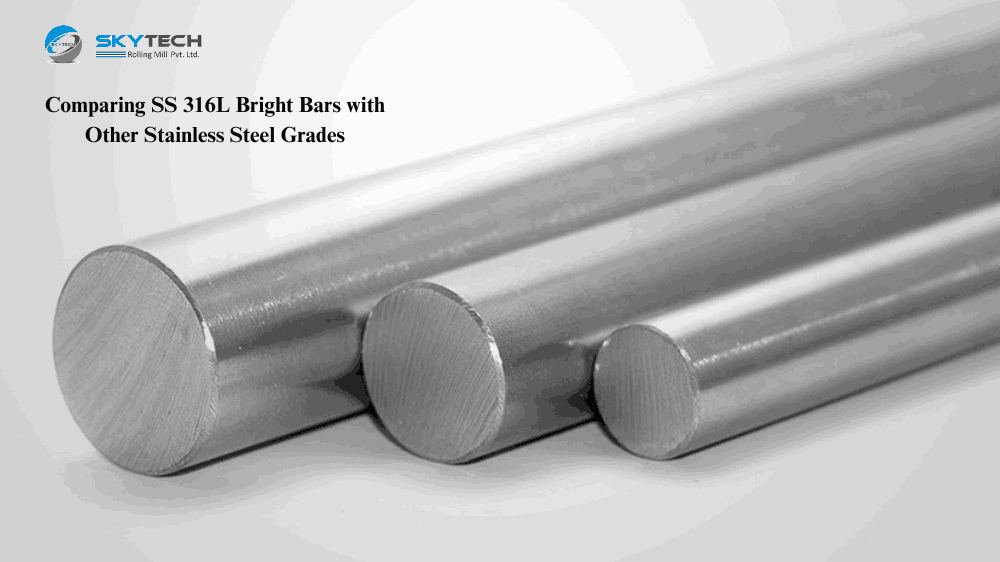
Industries that need strength, durability, and accuracy need stainless steel bright bars. They are good for engineering, construction, chemicals and marine work because they have a smooth finish and work well. There are different grades of stainless steel, and the right one for your project depends on what you need it for. People often choose SS 316L bright bars from this list of grades. They are useful in harsh conditions because they don’t rust and have a low carbon content. This blog post explains what makes SS 316L bright bars unique and how they are different from other grades like SS 304, SS 310 and duplex stainless steels.
What Makes SS 316L Bright Bars Special?
Stainless Steel 316L bright bars are made with chromium, nickel and molybdenum. The molybdenum improves their resistance to chloride and acid corrosion. The “L” stands for low carbon which keeps the metal from getting damaged during welding and stops intergranular corrosion.
They are highly durable and maintain their mechanical strength even after long-term use. Their smooth surface makes them easy to clean and maintain, which is important for industries like food and medicine.
These bright bars are used in construction frameworks, chemical equipment, pipelines, marine structures and heat exchangers. They work well in wet and corrosive places where other types of stainless steel might not. They are one of the most reliable grades of stainless steel because they are strong, resistant to corrosion, and easy to find.
Comparing SS 316L Bright Bars with SS 304 Bright Bars
SS 304 bright bars are the most common stainless steel grade. They have chromium and nickel in them, which makes them resistant to rust in most situations. But they don’t have molybdenum, which makes them less effective in marine or chemical exposure.
SS 316L bright bars resist pitting and crevice corrosion better than SS 304. They are ideal for seawater systems, chemical plants, and industries where exposure to salt and acids is frequent. SS 304 bright bars are less expensive and suitable for food equipment, household goods, and architectural projects where corrosion is not severe.
When cost is the main factor, SS 304 bright bars are a practical option. But when the project involves aggressive chemicals or saltwater, SS 316L bright bars provide much better long-term value.
Comparing SS 316L Bright Bars with SS 310 Bright Bars
SS 310 bright bars are designed for high-temperature service. They contain more chromium and nickel which help them resist oxidation and scaling at elevated heat. These bars are used in furnaces, boilers, and other heat-intensive equipment.
SS 316L bright bars aren’t meant to be used in very hot places but they are stronger in places where they might corrode. In chemical processing, pharmaceuticals and marine construction, where exposure to acids and chlorides is constant, they are the best choice.
The difference is clear: SS 310 bright bars are the right choice for high-heat applications, while SS 316L bright bars are better suited for corrosive conditions.
Comparing SS 316L Bright Bars with Duplex Stainless Steel Bright Bars
Duplex stainless steel bright bars are stronger and tougher than SS 316L because they have both ferritic and austenitic structures. They also don’t crack under stress, which makes them great for use in offshore and petrochemical settings.
Even though duplex bright bar has these benefits it costs more and is harder to find. They also need to be very skilled at welding and making things. SS 316L bright bars, while not as strong, are easier to work with and are widely available at a lower cost.
For demanding projects that require extreme strength duplex bright bars are useful. For general industrial, marine, and chemical uses, SS 316L bright bars offer a balance of performance, price, and availability.
Applications of SS 316L Bright Bars
SS 316L bright bars are used in many different fields because they are flexible and don’t rust. Some common uses are:
Marine equipment – propeller shafts, fasteners, and structural parts that work in saltwater.
Chemical plants – tanks for storing things, equipment for processing things and pipes that come into contact with acids.
Food and beverage industry – equipment requiring hygiene and resistance to cleaning chemicals.
Pharmaceutical production – Tools and machines that need materials that are clean and don’t react.
Construction industry – parts of a structure, supports and exposed parts that don’t rust.
Heat exchangers – tubes and fittings that deal with corrosive liquids.
Medical devices – surgical tools and implants that need to be biocompatible and not corrode.
These different uses show why SS 316L bright bars are one of the most flexible types of stainless steel.
Choosing the Right Stainless Steel Bright Bar for Your Needs
Choosing the right grade depends on several factors.
Corrosion resistance – SS 316L bright bars are the best for saltwater, acids and chemicals.
Strength requirements – Duplex stainless steels offer higher strength than both SS 304 and SS 316L.
Heat resistance – SS 310 bright bars perform in high temperature environments.
Cost considerations – SS 304 bright bars are the most economical choice for general use.
For projects where failure from rust or corrosion is not acceptable, SS 316L bright bars are the safer option.
Cost Factor
The cost of stainless steel bright bars changes depending on the grade. SS 304 bright bars are affordable but SS 316L bright bars are expensive as they have molybdenum and are stronger. SS 310 and duplex grades are priced higher because of their specialized properties.
Although SS 316L bright bars have a higher initial cost than SS 304, they often reduce long-term expenses. Their ability to withstand corrosion lowers repair, replacement and downtime costs. For the duration of the project many industries find that SS 316L bright bars are a more cost-effective option.
Standards and Grades Available
SS 316L bright bars are manufactured according to international standards like ASTM, DIN, and JIS. These standards make sure that the dimensions are correct, the properties are reliable, and the quality is always the same. They also make it easier to find materials around the world that meet the needs of the project. SS 316L bright bars are available in different shapes such as round, square and hexagonal providing flexibility for varied industrial uses.
Conclusion
SS 316L bright bars are a good choice for many industries because they are resistant to corrosion, last a long time and are easy to use. They protect better in chemical and marine environments than SS 304. They best against acids and saltwater than SS 310 does. Duplex stainless steels are stronger, but they cost more and need to be handled by experts.
For projects where corrosion resistance and long-term performance are important, SS 316L bright bars deliver reliable results. Their availability, compliance with international standards, and proven track record make them one of the most trusted stainless steel grades used worldwide.

